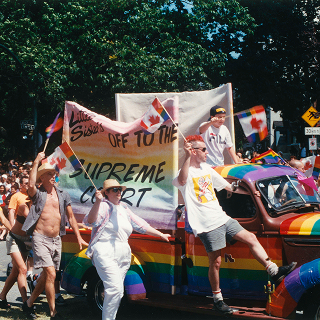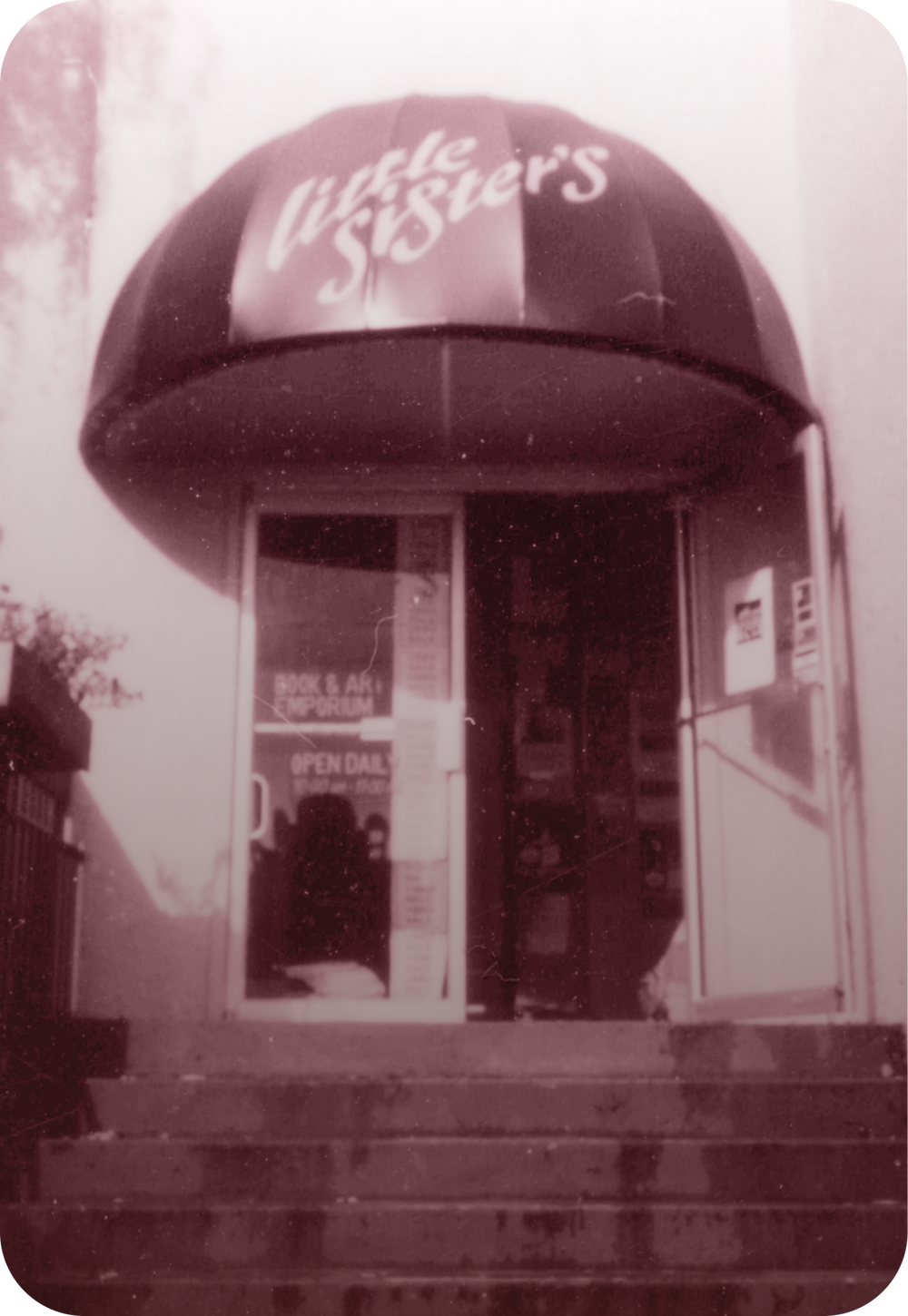
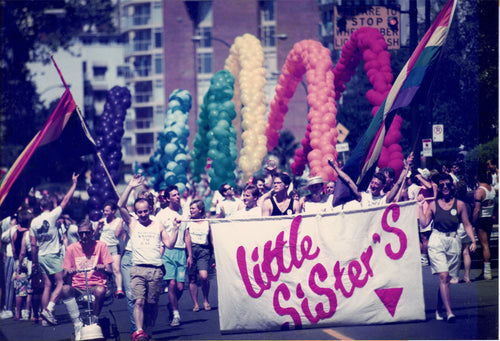


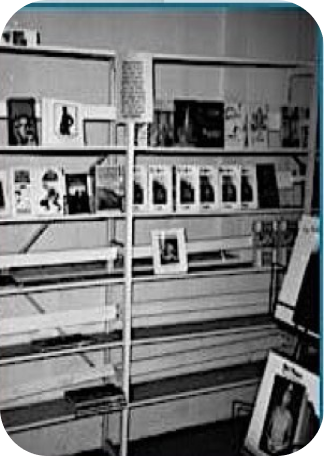
Officials began seizing shipments of literature bound for the store, marking the start of the censorship fight.
Two years after opening, Little Sister's started getting a different kind of attention. In 1985, Canada Customs officials began deeming books and magazines bound for the store “obscene” and seizing them at the border.
The materials were queer: books and magazines dealing with gay and lesbian sexuality, art, and culture. Nearly all of the store's stock came from U.S. publishers, so every shipment had to cross the border, where customs agents had broad power to intercept anything they judged obscene. For Little Sister's, that power came down hard.
What made it galling was the selectivity. The same titles sailed through customs when they were headed to mainstream shops like Duthie's or Chapters. Award-winning books, magazines sold at newsstands across the country, materials sitting in public libraries — all flagged and held the moment the shipping label read 1221 Thurlow Street. Customs examined about eight percent of everything entering the country. It examined almost everything coming to Little Sister's.
The pattern was relentless: shipments delayed for weeks or months, pages torn out, whole orders lost. The shelves grew bare, revenue suffered, and the message was unmistakable — this literature, and the people who read it, were not welcome.
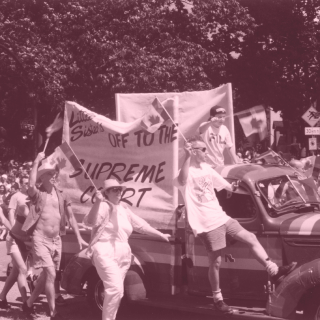
It was targeted discrimination dressed up as border enforcement, and it became the defining fight of the store's life. What customs didn't anticipate was that this small West End bookstore would fight back, all the way to the highest court in the country. (The full story is in the Queer History feature.)